Researching educational technology has really helped me define the purpose for my degree. Now, when I am asked how my degree correlates with my career path I have a clear answer. I feel that the educational technology course has equipped me with the knowledge needed to enhance my students learning in the classroom by the exposure that I have received from this class. I can also now show other teachers what I have learned and get them to a level of comfortability with using technology. The research that we have discovered in this class clearly reveals that technology is needed to enhance student learning and that as an educator it will be my responsibility to learn how to use technology in my lesson design.
Blogging has caused me to become involve with using various types of technology. I like the idea of blogging and I definitely believe that I will incorporate blogging into my lesson design in the future. I do plan to teach business and career development courses in high school and I think blogging will be a great way to communicate with my students.
My technology plan is being implemented through a problem based learning experience for a 6th grade math class. The students were presented with the problem that the City they live in is experiencing an increase in the population and that they wanted to build a new recreation center in order to prevent overcrowding of the current recreation center. The students are currently studying the unit on Geometry and Measurement and they will learn how to apply these concepts within the project of creating their own design of the recreation center.
Technology Plan for PBL: Students will utilize live binder (passcode:2012) http://www.livebinders.com/play/play_shared_binder?id=313851to access all vital information concerning the project. I will allow students to use Google Sketchup to create a 3D model of their recreation center design. I will setup an edmodo account between my students and I that will allow them to communicate about the project. As I find information that will be useful I will post to the class site. If there are questions that they would like to ask this is the place where either myself or other students can provide answers. Students will create a business proposal for panel of judges that will be listening to their presentations. They can choose to create a paper or digital proposal. If students choose to create a digital proposal they will be allowed to use google sites because they shouldn’t have problems accessing this site due to the security restrictions associated with their login numbers.
At the close of the project I will access the students engagement using a EPhone model for engagement.
I will review the levels of engagement using a prezi with the students http://prezi.com/iffrrvma8vvk/the-e-phone/. I will also inform students that prezi is an option for preparing the business proposal.
Change your thinking and Change the World I enjoyed watching the video and they were really enlightening. The videos showed how students are thirsty for varied teaching techniques. They want to learn by doing. I agree that the learning experience is so much more memorable when there is action involved. However, I believe that there has to be a foundation of knowledge given in order to be able to be productive in an interactive environment. It is important to have an interactive environment in the classroom to promote critical thinking and collaboration among students. If there is no opportunity for challenges between peers then we remove the critical thinking from the design of the lesson.
The purpose of the Jing that I created was to walk my math students through a powerpoint presentation that teaches them how to convert within the metric system. I could have simply allowed my students to view the powerpoint but I believe its a more interactive experience if they hear my voice. There are many problem based learning experiences that occur in my classroom and my students often have to prepare presentations. I have tried to persuade my students to use other methods than powerpoint and this would be an opportunity for them to be curious about how I created the Jing.
I created the Jing and then uploaded the Jing to screencast so that it's avaliable online for people to view. It was simple to create the Jing but I couldn't figure out how to provide a link and then I remembered to send the Jing through screencast. I will use Jing in the future however, I am very interested in creating a podcast and using other Web 2.0 technologies.
After completing the MAPping information activity, what are your reactions to your findings? What will you do differently while searching on the Internet for information now? How confident are you with the information you've used in the past (as part of your college career and/or in your profession)?
It was very surprising to see how little I know about how to effectively research to determine if the information that I am finding is truly credible. The information literacy quiz informed gave me a great insight on what to look for when I am searching for a credible website. The amount of search engines was unbelievable; the only two that I knew automatically was google and yahoo. However, when I looked at some of the other search engines it appeared that yahoo is behind many of those other sites. Finding the author of a website was interesting because the process allowed me to determine the validity of the information on the site. Figuring out the author can lead to researching the author to determine if the author is a good source for information. I truly did not know that URL was an acronym for Uniform Resource Locator. As much as I "thought" I knew about the Internet I found out that I really don't know much.
The extensions that I was familiar with were org, com, edu, and gov. I never knew the exact meanings but I could relate the validity of information by looking at the extension in a web address. I feel embarrassed to say that I didn't know that it was actually called an extension.
In the future I will be able to better choose the website that offers the most credible information by following the steps provided in the MaPping. When I read about the MaPping activity I was guilty of being the person that thought the most credible link appeared in google or yahoo when searching a particular topic.
I am confident that in the past I have done my best to research credible sources because I try to use Google Scholar along with the journals and periodicals in the library database. What I need to accomplish is more of the MapPing process through research for my students and my own work too.
What are some implications for the future of our students if we fail to teach them these skills in school? After all, the schools may block access to sites, but students still have access at home.
Students need to be taught these skills so that they learn early to determine the difference between good research and great research or factual versus opinionated research. One problem that I run into in my class is that students are unable to research and find the information needed to complete a task in a timely manner. Research becomes a tedious task to accomplish and although the steps of MaPping increases the tediousness in the end you will have valid research. Definitely children need to be taught this now because, sad but true; I have never had any training on information literacy of the Internet until now.
Do you see any advantages for organizing your information via Delicious and/or Google Reader? What are some ways you think you could use these tools in the future?
There are many advantages to organizing information via Delicious. I created a Delicious account about a year ago but then there was a transition in their business and I was supposed to accept terms for the new company and I never did; so needless to say my account was closed. I created a new account http://www.delicious.com/tiftaylor and the bookmarks that are presently there were transported from the bookmarks saved on the computer. Before Delicious made a switch in business there was a link that allowed you to share your delicious bookmark account with other people, which allowed everyone to network and share links. With the new setup I don't see that as an option. Overall, I believe the Delicious account is a great place to house bookmarks because I can always access the account regardless if I am on the original computer where I created it.
Here are their ten research-based principles of Assessment for Learning (AFL) to guide classroom practice:
AFL should be part of effective planning of teaching and learning
AFL should focus on how students learn
AFL should be recognized as central to classroom practice
AFL should be regarded as a key professional skill for teachers
AFL should be sensitive and constructive because any assessment has an emotional impact
AFL should take account of the importance of (and foster) learner motivation
AFL should promote commitment to learning goals and a shared understanding of the criteria by which they are assessed
AFL develops learners’ capacity for self-assessment so that they can become reflective and self-managing
AFL should recognize the full range of achievements of all learners
Learners should receive constructive guidance about how to improve
The principles that are highlighted above were very personable to me in my current position. I am currently teaching 6th grade and in my school district we have implemented problem based learning in our classrooms and the concept of problem based learning directly relates to these principles. Through problem based learning students aren't simply assessed by answering questions on paper but they are given assessments that provide them with real world problems that need to be solved. Students are challenged to use critical thinking skills and research in order to find solutions to the problems that they are given.
Electronic Portfolio Assessment Lorenzo, G. & Ittelson, J. (2005) An overview of e-portfolios. Educause Learning Initiative, ELI aper,1-28. Retrieved February 12, 2012 http://www.educause.edu/ir/library/pdf/ELI3001.pdf
I am supportive of the electronic portfolio's simply because I agree with the definition given in the article above, which says that e-portfolios enhance teaching, learning, and assessment practices. I also believe that an electronic portfolio is preferable among employers when someone is seeking employment. E-portfolios gives a visual an electronic visual of your experiences and knowledge gained throughout your educational career. The electronic portfolio will allow me to have an electronic copy of my accomplishments in one central location. The portfolio gives me the opportunity to learn through experience so that I am able to apply teaching practices that I have learned in my own classroom.
Wiki's Purpose I created a wiki not really knowing at first what to talk about. What would people be interested in reading or sharing stories about on a wiki page. I knew that my wiki needed to have a purpose. So, I decided to create my wiki surrounded based on my career. I am a 6th grade math teacher and though the math seems simple to me, many students struggle with learning and understanding math. I titled my wiki "NEW GENERATIONS" and I plan to use this wiki to discover ways of engaging students in learning math. I am open to all subjects but currently math in my focus. I found a you tube clip from Pearson Education promoting a math program that they have created called Envision. See below.
Advantages and Disadvantages of Wiki's
In reading and listening to video tutorials wiki's seem to be great for planning and collaborating with groups of people. The wiki sites are user friendly because there are only a limited number of options given to create or edit a page. The ability to utilize wiki's in the classroom with certain privacy settings is a plus! Educators are always looking for ways to enhance the curriculum. What I dislike about the wiki platform is that many people have the ability to edit the page.
Web 2.0 Technology
It was very interesting to watch the animoto presenation. I have heard of animoto but I have never used the presentation tool so, I am putting it on my to do list to explore animoto more so that I am able to utilize it. I also saw a link for a podcast which I have also heard of but never used so I am adding that also. The video link for the podcast was marked private so I will do further research to learn more about it.
Educational Technology is the concept of incorporating education with technology while developing technical, academic, and cognitive, and career related skills. Training and development is used to enhance the learning envrionment in any setting.
A look into who specializes in educational technology.....
Connecting Education, Leadership, and Technology: The overview for this company lured me into their website. I appreciate their goals of improving teaching, learning, and educational management in an effort to satisfy education reform. http://celtcorp.com/CompanyOverview.aspx
CELT's vision for using technology to improve teaching, learning, and educational management has evolved based upon contemporary education reforms and emerging information technology trends. CELT is constantly moving forward and developing new programs and services to address high priority needs of the field including assisting states to harness technology in order to meet the requirements and challenges of the No Child Left Behind legislation as well as specific school district or community level education reform and federal e-rate program initiatives.
Mission Statement
To help learning organizations attain their vision, mission, and goals by integrating high-quality programs, services, and technology with the organization's people and processes in a timely, efficient, and cost-effective way.
ASCD-This website focuses on educational leadership. They make every effort to inform educators of new information and research to benefit the students in the classroom. Although, their only focus isn't educational technology there is a focus. http://www.ascd.org/about-ascd.aspx
Education is the foundation of all successful American citizens. Whether the education is formal or informal everyone receives training or teaching in order to be able to accomplish goals in life. Education is not only learning basic courses such as math, reading, science, or social studies. Education also includes basic life skills such as problem solving, critical thinking, or working collaboratively with others. There are several definitions in Merriam- Webster dictionary for the word technology; however what they all have in common are the word practical. Technology in education is hands on learning through technical devices that allows the learner to apply skills being taught.
In the field of educational technology the learner consistently incorporates the use of technology in their education. The use of technology travels beyond learning in the classroom; the learner becomes knowledgeable globally through the experiences of using technology to problem solve. The classroom incorporates real world experiences with content and technology. Learners should communicate their understanding of the content as it relates to the world we live in through the use of technology. The learner will make decisions on appropriate technical devices/software to use in order to present information to various types of audiences.
The teacher will serve as a facilitator of learning in the classroom. The teacher will provide an environment that promotes critical thinking, adaptability, problem solving, collaborative learning, and the use of technology. The teacher will guide learners to find answers to real world problems that will allow the learner to discover instead of being given the information initially. The discovery of the information will allow the learner to experience a feeling of accomplishment that will aide in the retention of the content.
Personally, I believe that Tony Wagner’s 7 survival skills of the 21st century should be embedded into the learning experience for all learners. The seven skills are as follows:
1.Critical Thinking and Problem Solving
2.Collaboration Across Networks and Leading by Influence
3.Agility and Adaptability
4.Initiative and Entrepreneurship
5.Effective Oral and Written Communication
6.Accessing and Analyzing Information
7.Curiosity and Imagination
The approach that I take to educating is a problem based learning approach that forces learners to solve a real world problem while learning the content and gaining the seven survival skills that are necessary in life. I expect the learner to use me as a resource in the classroom and not the only source.
The quote “Tell me and I'll forget. Show me, and I may not remember. Involve me, and I'll understand”, author unknown is applicable for my philosophy because I believe that learners have to be involved in their learning in order to retain information and apply it later in life.
How can a philosophy of educational technology help me?
Taking the time to write my own philosophy actually caused me to put my profession into perspective and how I plan to use this degree to go further in my career.
Creating a New Culture of Teaching and Learning
Wow! Reading this article was enlightening and empowering. There was more than one area in this article that stood out and caused me to really think about where we are heading in education.
The first section, “If it’s on the internet, is it true?” was interesting because there is a fine line between leaving students to discover learning by using the internet and actually sitting them down giving them certain information that they should just know. This section shows the importance of teaching students using the internet as a resource and not allowing the internet to teach our students.
The second section, “Coming Attraction: Live video cameras in every classroom”, made me question myself. Would I be the same teacher if I were on video camera every day? I do believe that the educational system would be different if teachers were constantly on video camera because then that increasing accountability for the teacher and the student.
Section four, ”Don’t do technology plans” and section 5 “Automating vs. Informating” go hand and hand. Reading these sections made me feel as though this was written for my school district and I do plan to share this article with my colleagues. I believe that there is so much focus on putting “MORE” technology in the schools and there is not enough focus on how to use the technology that we already have for the benefit of the students. I love the analogy of the pencil to the computer when it comes to students writing an essay.
My Expectations for ETEC 524
I expect to learn the real meaning of educational technology and be able to provide an explanation when asked, "How will this degree help further your career?" I would hope that this class continues to build on the prior knowledge that I have developed in technology and allows me to further my understanding of how to utilize technology in education.
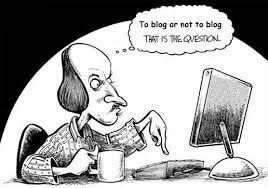 I will blog!!!!!
